
Hammer Union Fittings: Male/Female Ends, Connections & Adapters
Hammer union fittings are pressure-containing flowline components configured with male union, female union, threaded, butt-weld or transition ends. Correct selection starts with End A + End B, then confirms the figure, nominal size, bore, working pressure and service condition.
Quick Answer: What Are Hammer Union Fittings?
A hammer union fitting is a pipe, adapter, valve, swivel, manifold branch or other pressure-containing component made with one or more hammer union connection ends. The most important identification is not only the nominal size: buyers should define the connection on both ends of the fitting and verify that the union figure, male/female geometry, sealing interface, bore and service class match the surrounding flowline system.
Hammer Union End Configuration Chart
Use the end configuration first to describe what the fitting must connect. Figure and pressure selection are confirmed separately against the existing system or approved drawing.
| Configuration | End A | End B | Typical Use | Key Data to Confirm |
|---|---|---|---|---|
| Male × Male | Male union | Male union | Straight pipe, adapter or equipment transition | Figure, size, bore, service |
| Male × Female | Male union | Female union | Orientation matching and flowline continuation | Matched geometry on both ends |
| Female × Female | Female union | Female union | Connecting two male-ended components | Figure, size, seal interface |
| Male × Thread | Male union | Threaded end | Equipment or piping adapter | Thread type, size, orientation |
| Female × Thread | Female union | Threaded end | Valve, manifold or piping connection | Thread type + union interface |
| Male × Butt Weld | Male union | Butt weld | Welded flowline fabrication | Pipe OD, wall, bore, material |
| Female × Butt Weld | Female union | Butt weld | Welded flowline fabrication | Pipe OD, wall, bore, material |
| Union × Reduced Union | Union end | Different union size | Controlled size transition | Both end sizes, bore transition, rating basis |
Hammer Union Male vs Female: What Is the Difference?
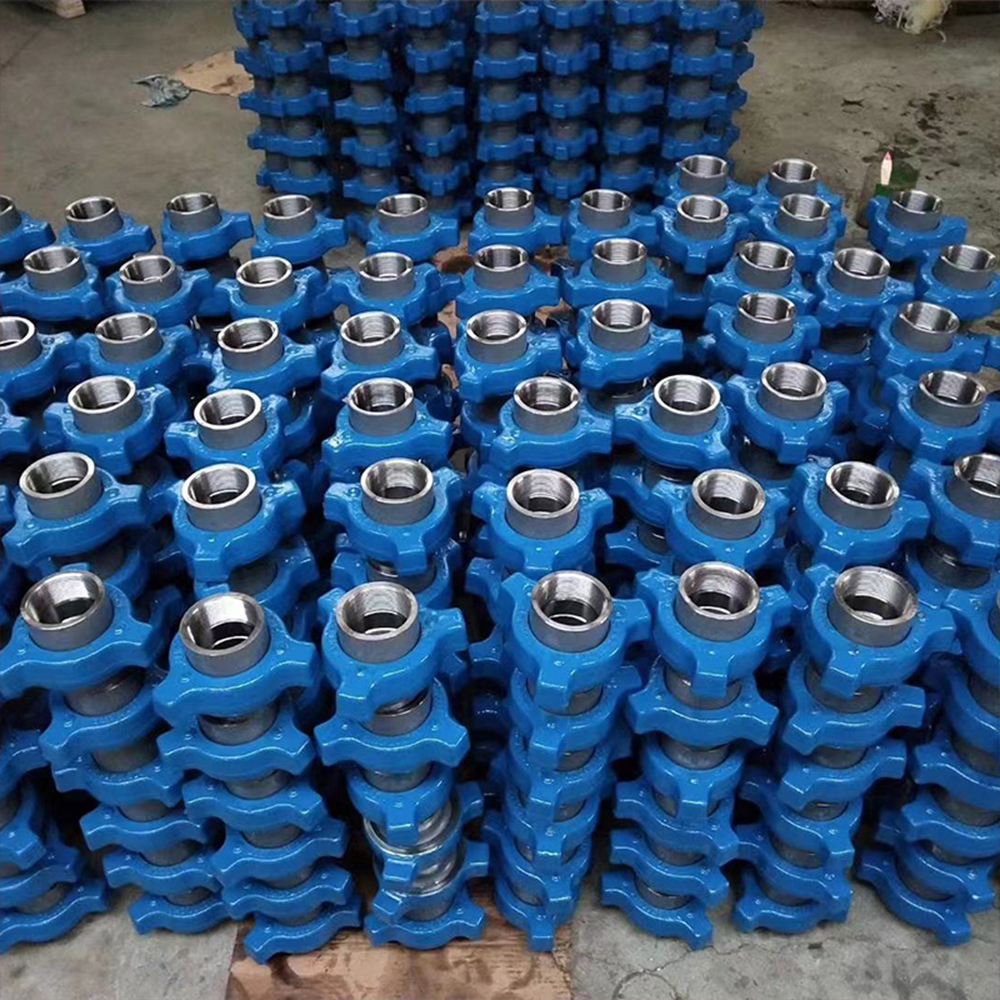
The male end carries the male sealing nose and flow bore that enters the matching connection. The female end provides the mating sealing region and the ACME-thread area engaged by the wing nut. A complete pressure connection requires the male and female interfaces to be compatible with the same approved figure and size family.
Male Hammer Union End
Common on pup joints, adapters, valves, swivels and other flowline components where a male union interface is required.
Female Hammer Union End
Provides the matching female pressure interface and ACME-thread region used with the correct wing nut and male end.
Wing Nut & Seal
The wing nut mechanically loads the matched connection; the seal system is figure-specific and must be confirmed with the approved geometry.
What Is the Difference Between a Hammer Union and a Hammer Union Fitting?
A hammer union is the quick-makeup pressure connection itself. A hammer union fitting is a broader pressure-containing component that incorporates one or more hammer union ends.
| Item | What It Describes | Example |
|---|---|---|
| Complete hammer union | Matched male sub, female sub, wing nut and seal system | Complete Fig-series union |
| Hammer union fitting | Pressure-containing component with one or more union ends | Pup joint, adapter, valve, elbow, swivel, manifold branch |
Threaded vs Butt-Weld Hammer Union Fittings
| Item | Threaded Fitting | Butt-Weld Fitting |
|---|---|---|
| External connection | Approved thread form and orientation | Machined weld end matched to pipe geometry |
| Data required | Thread type, size, pin/box orientation | Pipe OD, bore, wall thickness, material, weld preparation |
| Selection focus | Thread compatibility + union interface | Pipe compatibility + union interface |
Need a Male × Female, Union × Thread or Union × Butt-Weld Fitting?
Send the required End A and End B connections, existing drawing or measured dimensions, plus the figure, nominal size, bore, working pressure, service condition and quantity.
Hammer Union Adapters and Transition Fittings
Transition fittings are used when End A and End B are not the same connection. The fitting should be specified from both ends rather than described only as a “hammer union adapter.”
| Transition Type | End A | End B | Key Data Required |
|---|---|---|---|
| Union to Thread | Male or female union | Threaded connection | Figure, size, pressure, thread specification |
| Union to Butt Weld | Male or female union | Butt-weld pipe end | Pipe OD, bore, wall, material, weld prep |
| Male to Female Adapter | Male union | Female union | Figure, size, bore, dimensional envelope |
| Reduced Union Adapter | Larger union end | Smaller union end | Both end sizes, bore transition, rating basis |
| Custom Equipment Adapter | Hammer union | Project-specific end | Controlled drawing or complete dimensions |
Engineering rule: if the two sides of a transition fitting have different pressure limits, the complete component must be evaluated against the applicable lowest-rated pressure-containing element and approved configuration.
How Hammer Union Fittings Connect Flow Iron Equipment
Can use male/male, male/female or female/female union-end combinations.
Elbows, tees, crosses, reducers and laterals can be produced with compatible union-end configurations.
Union-end plug valves, check valves and swivels are integrated by matching connection geometry and service requirements.
Inlets, outlets and branches may use union-end fittings to simplify rig-up and maintenance.
Figure and Pressure Selection: Use the Dedicated Technical Guide
End configuration does not replace figure and pressure selection. The union figure, nominal size, pressure class and service condition must still match the parent flowline system. To keep this page focused on fittings and connection geometry, detailed figure and pressure comparison is covered in the dedicated
Hammer Union Types, Sizes, Figures & Pressure Ratings Guide.
For detailed Fig 1502 technical information, use the
Fig 1502 Hammer Union Dimensions & Pressure Rating Guide.
How to Specify a Hammer Union Fitting
- Define End A. Male union, female union, thread, butt weld or another approved connection.
- Define End B. Provide the same level of detail for the opposite side.
- Confirm the parent hammer union figure. Use the existing system drawing, permanent marking or approved specification.
- Confirm nominal size and bore. Avoid an unintended restriction in the flow path.
- Confirm working pressure and service. Include fluid, solids/proppant, temperature and sour-service requirements where applicable.
- Provide controlled dimensions. For replacement fittings, send a drawing, part number or measured interface data.
- State testing and documentation requirements. Define required material certificates, inspection, pressure testing and traceability before quotation.
Example RFQ: Describe Both Ends
| Parameter | Example Requirement |
|---|---|
| Application | High-pressure flow iron / pressure-pumping system |
| Figure | Specify from approved system requirement |
| Nominal size | Specify required size |
| End A | Male hammer union end |
| End B | Female hammer union / threaded / butt-weld / project-specific end |
| Bore | Confirm against connected flowline |
| Service | Fluid, solids/proppant, temperature and service class |
| Reference | Drawing, part number, photo or measured interface data |
Are Hammer Union Fittings Interchangeable?
They should not be assumed interchangeable because they share the same nominal size, color or general appearance. Compatibility must be checked at both the union interface and the external connection.
Before Installing or Replacing a Hammer Union Fitting
- Confirm the figure, nominal size and connection orientation.
- Inspect male and female sealing surfaces for erosion or mechanical damage.
- Verify the correct seal system and seal-groove condition.
- Check ACME threads and wing-nut engagement where applicable.
- Check bore condition and verify that the fitting does not introduce an unintended restriction.
- Verify threaded-end or butt-weld-end dimensions against the mating equipment.
- Confirm material, temperature and service-class requirements.
- Fully depressurize and isolate the line before makeup, breakout, inspection or replacement.
Frequently Asked Questions
What are hammer union fittings?
They are pressure-containing flowline components designed with male, female or complete hammer union connection ends, or with a hammer union end combined with a threaded, butt-weld or project-specific connection.
What does male × female mean on a hammer union fitting?
It means the component has a male hammer union connection on one end and a female hammer union connection on the other end.
Is a hammer union the same as a hammer union fitting?
Not always. A complete hammer union is the quick-makeup pressure connection itself. A hammer union fitting can be a larger component—such as a pup joint, adapter, valve, elbow, swivel or manifold branch—that incorporates one or more hammer union ends.
What information is needed for a replacement fitting?
Provide End A and End B, the figure, nominal size, bore, working pressure, service condition, thread or pipe data where applicable, and a drawing, part number or measured interface dimensions.
Where should I compare hammer union figures and pressure ratings?
Use GPE’s dedicated Hammer Union Types, Sizes, Figures & Pressure Ratings Guide. This page is intentionally focused on fitting and end-connection configuration.
Can GPE review a custom transition fitting?
GPE can review a defined transition requirement when the buyer provides the two end connections, figure, size, bore, pressure basis, service condition and controlled drawing or dimensional data.
Related Hammer Union & Flow Iron Resources
Types, sizes, figure numbers and pressure classes.
Fig 1502 Hammer Union Guide
Fig 1502 technical data, pressure and dimensional guidance.
GPE Hammer Union Products
Commercial product range and quotation path.
Integral Fittings
High-pressure elbows, tees, crosses and reducers.
Rigid Straight Pipe
Union-end straight flow iron and pup-joint applications.
High-Pressure Swivel Joints
Articulated flow paths with union-end connections.
Send End A + End B — We Will Review the Connection
For an existing flowline or replacement fitting, send the current figure, nominal size, bore, working pressure, service condition, connection on both ends, and a drawing or measured dimensions where available.